Many parents notice that their toddler becomes restless, emotional, or frustrated during playtime. Toys are scattered everywhere, your child jumps quickly from one activity to another, and within minutes the room feels chaotic.
Often the problem is not that toddlers have too little stimulation. The opposite is true. Too many toys, flashing lights, loud sounds, and constant choices can easily lead to an overstimulated toddler.
A Montessori playroom offers a calmer alternative. Montessori environments are intentionally designed to help children focus, explore independently, and regulate their emotions. By simplifying the play environment and offering meaningful Montessori activities, parents can create a space that supports calm play instead of overwhelm.
If you are looking for Montessori playroom ideas that actually help toddlers feel calmer, this guide will walk you through how to design a Montessori toddler playroom step by step.
In this article you’ll learn
- how to create a Montessori playroom that supports calm play
- how toy rotation reduces toddler overstimulation
- how to implement a toy rotation system
- Montessori activities that encourage focus
- calming activities for toddlers
- how to calm down a toddler using their environment
Why a Montessori Playroom Helps an Overstimulated Toddler
Toddlers are still learning how to process the world around them. When their environment is filled with too many toys and visual distractions, their brain has to constantly decide what to focus on.
This can quickly lead to frustration, short attention spans, and emotional outbursts.
A Montessori playroom reduces this overwhelm by simplifying the environment. Instead of offering endless toys, the room contains a small number of thoughtful Montessori activities that encourage concentration and independent play.
When toddlers can clearly see their choices and understand how to use them, they often feel calmer and more capable.
A simple Montessori toddler playroom creates an environment where children can slow down, explore, and engage deeply with their play.
Step 1: Start With a Montessori Toy Shelf
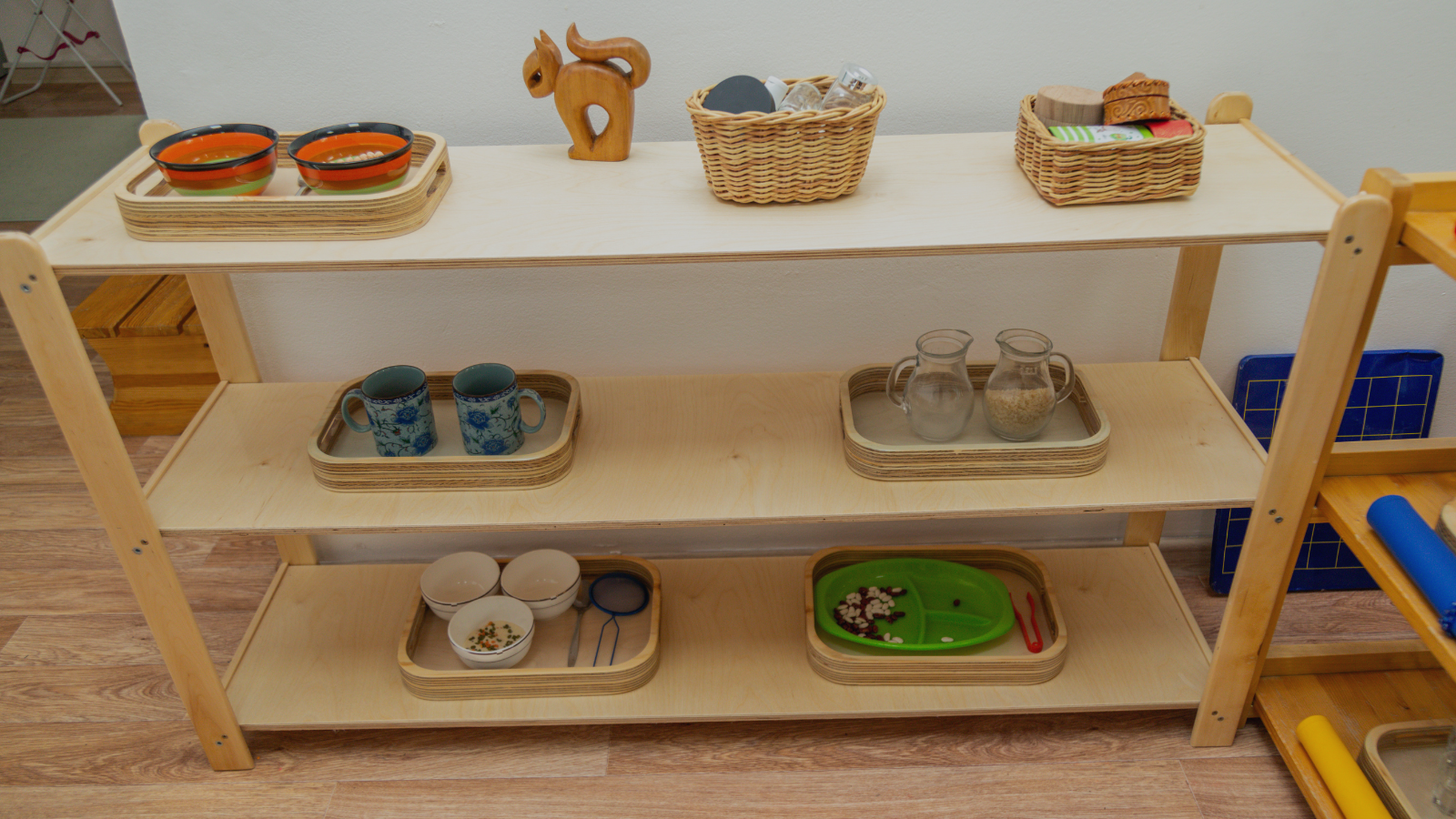
One of the most important parts of a Montessori playroom is a low, open toy shelf. Instead of storing toys in large bins, Montessori toys are displayed neatly so toddlers can see and choose their activities independently.
This simple setup helps prevent overstimulation because children are not overwhelmed by too many choices.
Look for a toy shelf that is:
- low enough for toddlers to reach
- open so toys are clearly visible
- simple and uncluttered
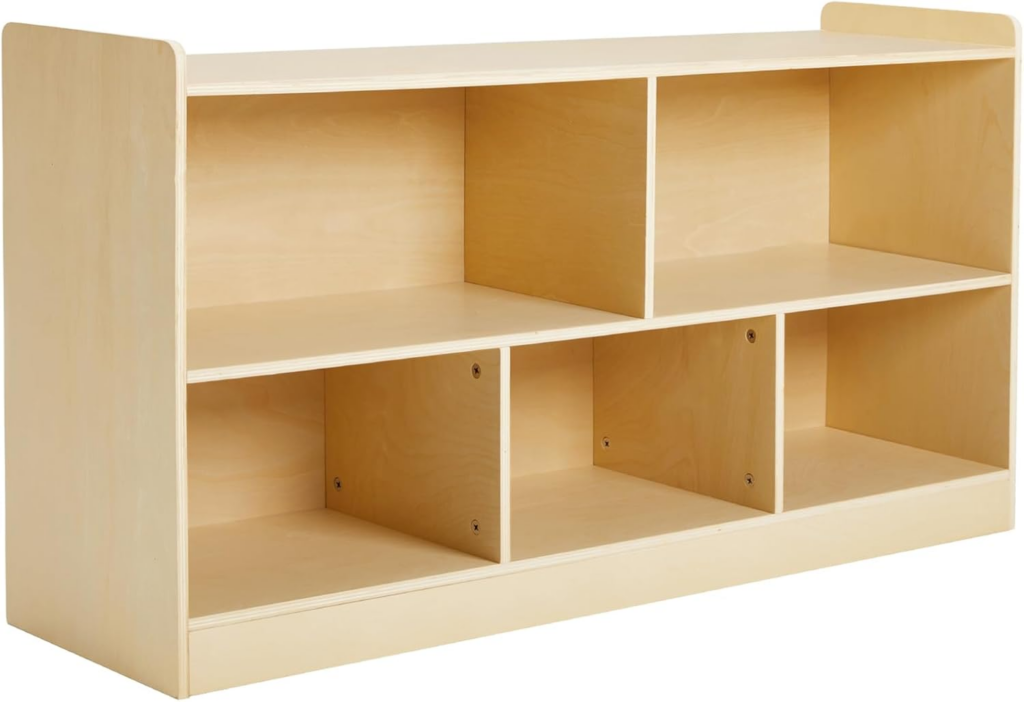
Montessori wooden toy shelf for toddlers
Place only four to six Montessori activities on the shelf at a time. Fewer choices help toddlers focus longer and engage more deeply in their play.
Step 2: Choose Montessori Activities That Encourage Focus
Many modern toys entertain children with flashing lights, sounds, and buttons. While exciting at first, these toys often overstimulate toddlers and shorten their attention span.
Montessori activities are designed differently. They encourage exploration, concentration, and problem-solving.
Some great Montessori activities for toddlers include:
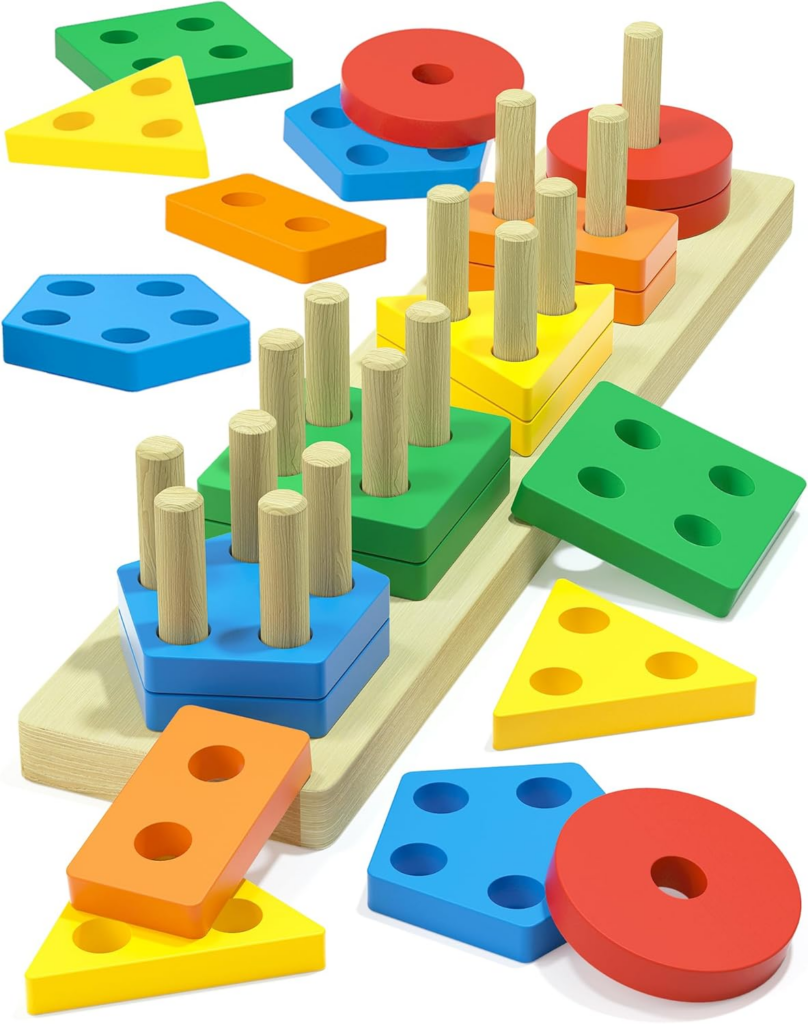
- stacking toys
- shape sorting
- simple puzzlesobject
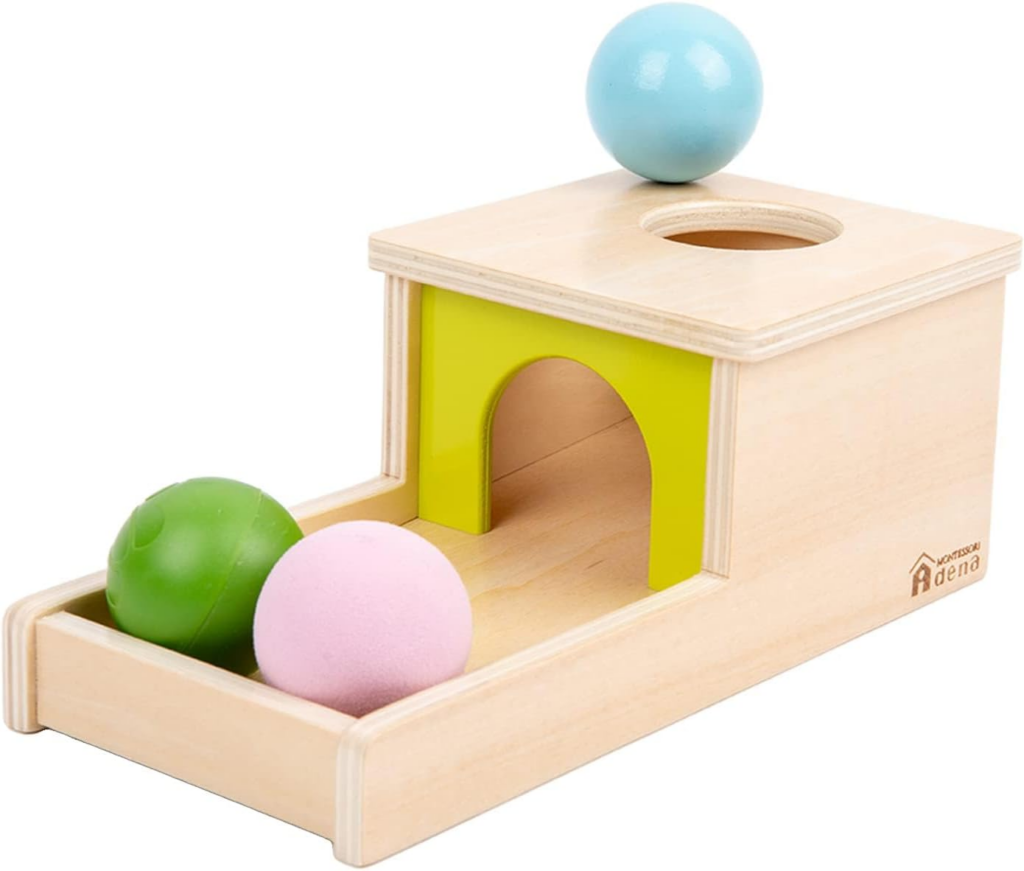
- permanence activities
- practical life activities like pouring or transferring objects
These types of toys allow toddlers to actively engage with the activity instead of passively watching it.
Step 3: Use a Toy Rotation System
Even calm toys can become overwhelming when too many are available at the same time. This is why many Montessori families use toy rotation.
Toy rotation means that only a small number of toys are available in the playroom while the rest are stored away.
A toy rotation system keeps the playroom calm and organized while also making toys feel new again.
If you are wondering how to implement toy rotation, the process is simple.
Start by gathering all your child’s toys and dividing them into small groups. Each group might contain four to eight toys.
Place one group on the Montessori shelf and store the others in a box or closet. Every one or two weeks, rotate the toys on the shelf.
Many parents notice that once they implement toy rotation, their child plays longer and becomes less overstimulated.
If you want to understand why toddlers become overwhelmed so easily, I explore this more deeply in my ebook When Little Minds Get Overloaded, where I explain how small moments throughout the day can slowly fill a child’s capacity before a meltdown appears.
Understanding overstimulation often helps parents respond with more calm and confidence.
Montessori Toys That Support Calm Play
Choosing the right toys can make a big difference in a Montessori playroom. Simple toys made from natural materials often encourage longer and calmer play sessions.
Some Montessori toy ideas that work well in a calm toddler playroom include:
- wooden stacking toys that support motor development
- wooden puzzles that encourage concentration
- shape sorting toys for problem solving
- object permanence boxes for early learning
- simple building blocks that encourage creativity
These types of toys help toddlers focus and explore without overwhelming their senses.
Step 4: Design the Playroom to Feel Calm
A Montessori playroom is not only about toys. The environment itself should feel calm and inviting.
Try to keep the room visually simple. Neutral colors, natural materials, and soft lighting can help reduce overstimulation.
A soft rug can create a comfortable play space, while baskets can help organize toys and materials.
Wall decorations should be minimal so they do not distract from play.
The goal is to create a calm toddler playroom where children feel safe exploring independently.
Step 5: Include Calming Activities for Toddlers
A Montessori playroom can also support emotional regulation by offering calming activities for toddlers.
These activities help children slow down when their emotions begin to rise.
Examples of calming activities for toddlers include:
- simple puzzles
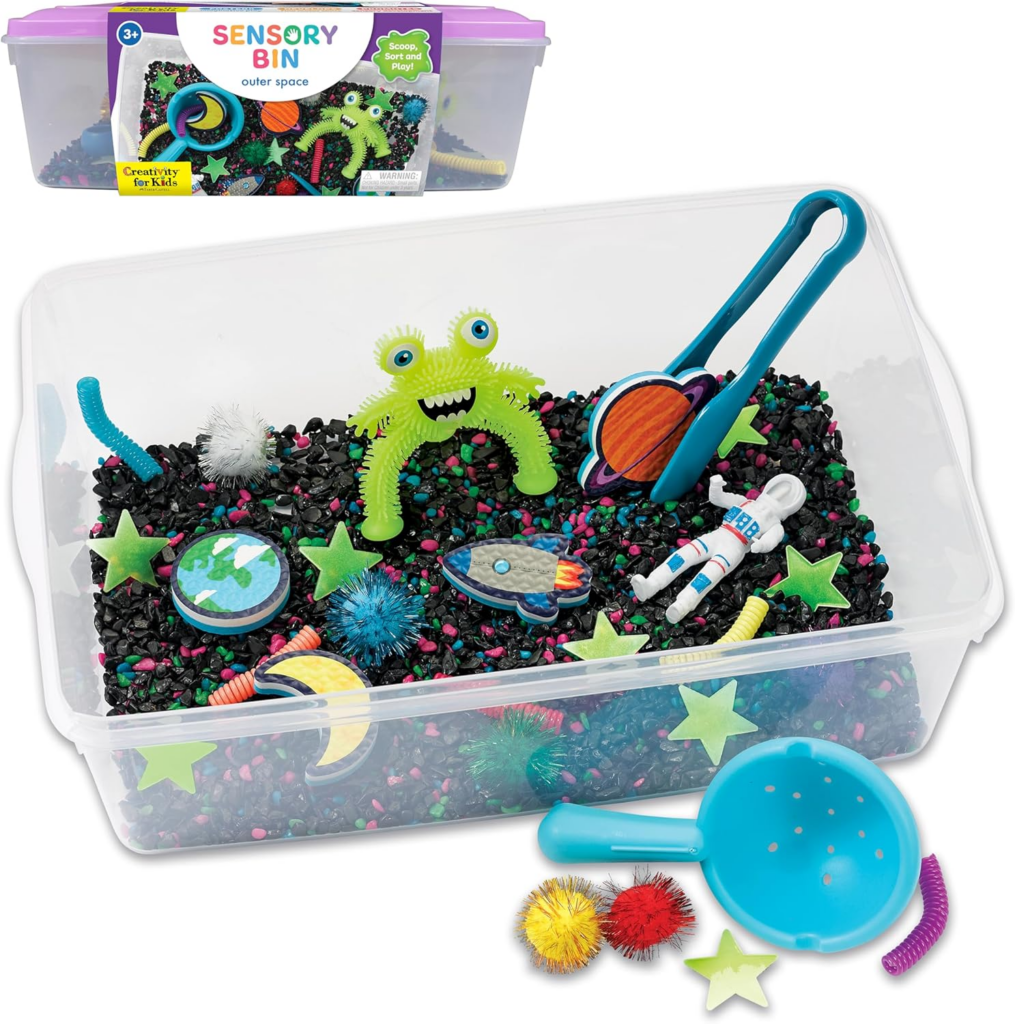
- sensory bin
- sorting objects
- looking at books together
- quiet practical life activities
These types of activities can be especially helpful when a child begins to feel overwhelmed.
How to Calm Down a Toddler Using Their Environment
When toddlers become overwhelmed, the environment around them can either increase the chaos or help restore calm.
A well-prepared Montessori playroom naturally supports calming down a toddler because the space encourages slower and more focused play.
If your toddler is having a difficult moment, gently guiding them toward a familiar activity like stacking blocks or doing a puzzle can help their nervous system settle.
Often toddlers do not need more stimulation. They simply need a calmer environment where their body can reset.
Creating a Montessori Playroom That Supports Big Toddler Emotions
Creating a Montessori playroom does not require expensive furniture or a perfectly styled room.
By introducing a Montessori toy shelf, offering thoughtful Montessori activities, and implementing a toy rotation system, you can create a simple Montessori playroom that supports focus, independence, and emotional regulation.
When the environment becomes calmer, toddlers often feel calmer too.
And in a home with young children, a little more calm can make a big difference.
When Your Toddler Still Feels Overwhelmed
Even with a calm Montessori playroom, toddlers can still become overwhelmed. Overstimulation often builds slowly throughout the day.
Small things like transitions, noise, social interaction, and choices can quietly fill a child’s nervous system until their capacity is reached.
In my ebook When Little Minds Get Overloaded, I explore how overstimulation develops in young children and why many emotional reactions appear after a day that quietly asked too much from them.
The book explains:
- why young children become overstimulated
- the quiet signs that appear before a meltdown
- how ordinary days can slowly overwhelm a child’s nervous system
- small shifts that can soften difficult moments
If you want to better understand your toddler’s big emotions, you can explore the ebook here.
Sometimes understanding what overwhelms young children is the first step toward creating calmer days for everyone.
Affiliate Disclosure: This article may contain affiliate links. If you purchase through these links, I may earn a small commission at no extra cost to you. I only recommend products that align with the calm and thoughtful approach I share here.
Leave a Reply